Hormuz Strait Crisis: Iran Allows Ships but Blocks ‘Enemy’ Vessels After Trump’s 48-Hour Ultimatum
The Hormuz Strait Crisis has entered a critical phase as Iran announced that commercial and international vessels can pass through the strategic waterway but with a major condition. Ships linked to what Iran calls “enemy nations” will not be allowed free passage. This announcement follows a sharp 48-hour ultimatum issued by former U.S. President Donald Trump, escalating already tense geopolitical conditions in the Middle East.
Iran’s statement signals a calculated move one that avoids a complete blockade of the Strait of Hormuz while still asserting its dominance over one of the world’s most vital energy routes. The situation reflects a delicate balance between de-escalation and strategic pressure, keeping global markets and governments on high alert.
Background: Trump’s 48-Hour Warning
The Hormuz Strait Crisis intensified dramatically after Trump issued a warning demanding that Iran ensure unrestricted access to the strait within 48 hours. He reportedly threatened military action, including strikes on Iran’s infrastructure, if Tehran failed to comply.
This ultimatum came amid rising hostilities involving Iran, the United States, and Israel. In recent weeks, the region has witnessed missile exchanges, military alerts, and growing fears of a broader conflict. Iran, in response to the ultimatum, has maintained that it will defend its sovereignty and retaliate against any aggression.
Iranian officials have made it clear that while they are not seeking to completely shut down global shipping, they reserve the right to control access based on national security concerns. This stance has added a new layer of uncertainty to an already fragile situation.
Strategic Importance of the Strait
The Hormuz Strait Crisis is particularly significant because of the strait’s unmatched importance in global energy trade. The Strait of Hormuz is a narrow maritime passage connecting the Persian Gulf to the Gulf of Oman and the Arabian Sea. Nearly one-fifth of the world’s oil supply passes through this route daily.
Major oil-exporting nations such as Saudi Arabia, the United Arab Emirates, Iraq, and Kuwait rely heavily on this route to transport crude oil to international markets. At the same time, countries like India, China, Japan, and several European economies depend on these shipments for their energy needs.
Any disruption in this region has immediate ripple effects across the global economy, influencing oil prices, inflation rates, and even stock market performance. That’s why the ongoing Hormuz Strait Crisis is being closely monitored worldwide.
Impact on Global Shipping
Shipping activity in the region has already been significantly affected. Reports suggest that maritime traffic has dropped sharply as shipping companies reassess risks and reroute vessels where possible. Insurance premiums for ships passing through the strait have surged, reflecting the increased threat level.
The Hormuz Strait Crisis has also created operational challenges for global trade. Shipping companies must now evaluate whether their vessels could be classified as “enemy-linked,” which could lead to delays, inspections, or even denial of passage.
Thousands of seafarers are reportedly stranded or facing uncertain conditions as companies pause operations or delay shipments. This has created a logistical bottleneck that could take weeks or even months to normalize if tensions persist.
Oil Market Volatility
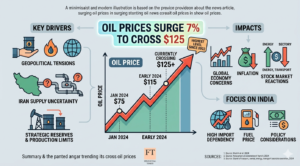
One of the most immediate consequences of the Hormuz Strait Crisis has been volatility in global oil markets. Prices have already shown upward movement due to fears of supply disruption.
Experts warn that if the situation escalates further, oil prices could spike dramatically, potentially crossing critical levels that would impact economies worldwide. Higher oil prices typically lead to increased transportation costs, rising inflation, and pressure on central banks to adjust interest rates.
For developing economies like India, which rely heavily on oil imports, the Hormuz Strait Crisis poses a serious economic risk. Increased import costs could widen trade deficits and put pressure on currency stability.
Conditional Passage: A Risky Compromise
Iran’s decision to allow most ships to pass but block “enemy vessels” is being seen as a strategic compromise. While it avoids a complete shutdown of the strait, it introduces ambiguity and risk.
The Hormuz Strait Crisis has now entered a phase where uncertainty itself is a major concern. Shipping companies, traders, and governments are unsure how Iran will define “enemy-linked” vessels. This lack of clarity increases the risk of miscalculations and potential confrontations at sea.
Additionally, the requirement for ships to coordinate with Iranian authorities could slow down transit times and create further inefficiencies in global trade.
Global Reactions and Diplomatic Pressure
The international community has responded with concern to the ongoing Hormuz Strait Crisis. Several countries have called for restraint and urged both Iran and the United States to resolve their differences through diplomatic channels.
Naval forces from multiple countries are reportedly on alert to ensure the safety of international shipping routes. However, increased military presence also raises the risk of accidental clashes, which could further escalate tensions.
Global organizations and energy agencies are also monitoring the situation closely, warning that prolonged instability could disrupt not only oil supply but also broader economic stability.
What Lies Ahead?
The future of the Hormuz Strait Crisis remains highly uncertain. While Iran’s partial reopening of the strait may prevent an immediate global supply shock, the situation is far from stable.
If diplomatic efforts fail and tensions continue to rise, the world could face a major geopolitical and economic crisis. On the other hand, if negotiations succeed, the current situation could de-escalate, restoring stability to global markets.
For now, the world watches closely as the Middle East stands at a critical crossroads. The coming days especially in light of Trump’s ultimatum could determine whether the Hormuz Strait Crisis moves toward resolution or further escalation.
Source: Click Here