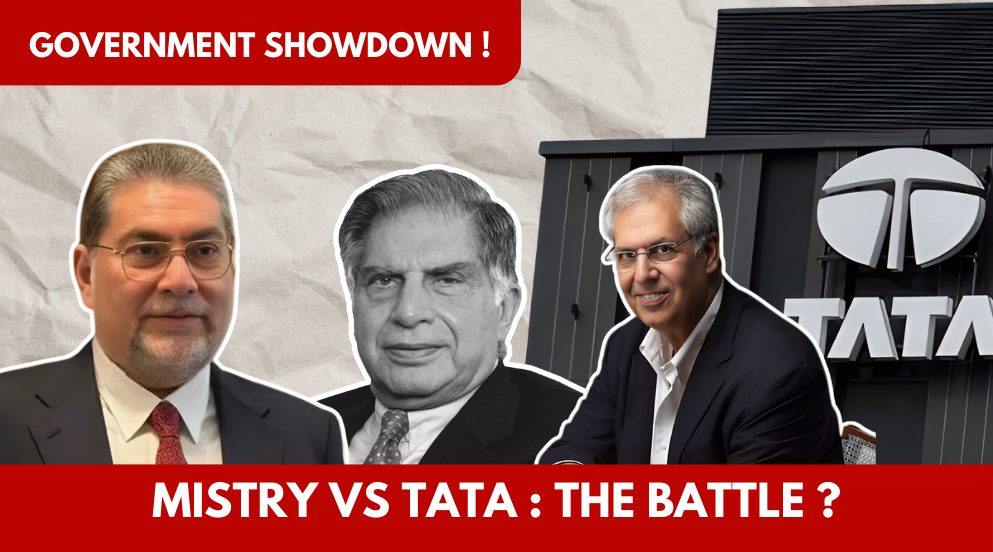
Tata Trusts Move Sparks Governance Debate by Mehli Mistry
A new governance debate has been produced within one of the most powerful philanthropic organizations in India. Mehli Mistry herself has demanded that the vice-chairman post should be abolished in Tata Trusts even more fundamentally than a title, the structure of the institution itself.
In the view of those who have heard him, Mistry is of the opinion that the position of vice-chairman is not mentioned in the Trust Deed in that document which governs and regulates the operation of the Trusts. Based on that, he has proposed that position be scrapped out altogether.
Why This Matters
The importance of this proposal can be explained by the fact that Tata Trusts has a large and influential scale. These charitable foundations are closely intertwined with the system of governance of the greater Tata Group and are instrumental in influencing the long-term institutional orientation.
Formal positions in such structures are not symbolic. They establish the notion of authority, contribute to decision-making and assist in establishing the organisational hierarchy. When a senior position is not reflected in the documentation of governing apparatus then significant questions of legitimacy, accountability and clarity are brought into being.
One of the major principles of institutional governance that Misty reveals in his argument is that structure should resemble documentation.
More Than a Technical Issue
Firstly this might look like a procedural or an administrative issue. Rarely can governance change in a vacuum.
In the last twelve months, there were observable changes in leadership at Tata Trusts and there was internal bickering on the part of appointments and the decision making processes. The Trusts have been going through the mazes of authority, representation and long-term strategic direction. The suggestion of getting rid of a top leadership position has wider consequences in that respect.
Observers view this as part of a continuous process whether intentional or natural to define the power share in the Trusts.
The Educational Clue of the Institution
Big and small heritage organizations tend to be run on the longstanding practices, modified throughout the decades. In some cases, positions are as a result of custom, which is not necessarily defined by law. These arrangements may lead to grey areas with time.
A question of governance presents organisations with an option; either formalisation of current structures or elimination of the inseparable as explicable in the governing structures.
This question is basically brought into the limelight by the Mistrey proposal. Is it time-tested practice sufficient to support practice? Or shall all offices have authority which is of foundational documents?
A Broader Governance Signal
There is also a broader change in corporate and institutional thinking reflected in the discussion. In all industries, stakeholders are becoming much concerned with transparency, accountability and well defined authority. Legacy organisations that already have a good reputation should be expected to exhibit structural clarity.
When he questions the authenticity of a senior position, the discussion turns outside the realm of personalities and into values.
What Happens Next?
At this point, the suggestion is a perspective of internal deliberations. Its impact on formal change is yet to be noticed.
Nevertheless, it is more significant how it has provoked a debate rather than the result it has achieved. Government systems that previously appeared to be stable are now being rethought.
And that in itself is important.
The Bigger Picture
Tata Trusts have been associated with stability, continuity and high institutional identity in the past. Any action that casts doubt over structural positions inevitably draws the interest not only in corporate India, but also in the eyes of the governance scholars in the rest of the world.
In case the position of the vice-chairman is finally reviewed or redefined, it might provide a precedent of how the legacy institutions might consider changing according to the changing demands of transparency and accountability.
At this point, there is one thing that becomes clear, namely, this is not a debate over a title. It deals with the manner in which authority is established, fated and defended at the upper halves of a given institution.
And that is the reason why people are paying close attention.