
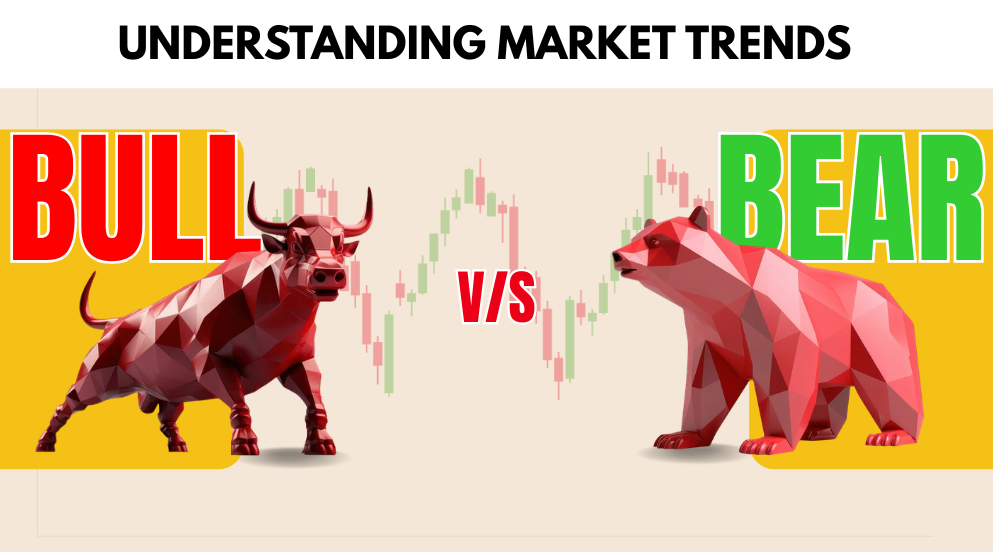
Understanding Market Trends: Bull vs Bear Markets
The fluctuations in the financial market are noticeable as prices rise, fall, pause, and move again. It’s all based on economic conditions, investor behaviour, and global events as these movements aren’t random. They do form specific patterns known as market trends.
Among these trends, two terms commonly used for long-term behaviour are bull markets and bear markets. Therefore, understanding the difference between bull and bear market trends is essential for anyone entering the trading market. These market phases do influence asset performance, investors’ ability to think, and planning on strategies that work best.
Let’s not waste time and help explain bull and bear markets in detail, focusing on their characteristics, causes, investor behaviour, and their role in long-term financial decision-making.
What Is a Market Trend?
Typically, a market trend refers to the general direction in which prices move over an extended time. When it comes to trends, don’t they define them as sustained movement in a direction over an extended period rather than short-term price changes? This can be upward, downward, or sideways.
A consistently upward movement in prices over time is called an upward trend; it is called a bull market. In contrast, when prices move consistently lower, it’s a bear market in trading.
Both trends reflect broader economic conditions and investor psychology, despite the isolated price movements.
What Is a Bull Market?
Typically, a bull market is a period during which asset prices rise steadily. Usually linked with economic growth, stronger corporate performance, and positive investor sentiment. When it’s a bull market, demand for assets increases as investors expect prices to continue rising.
The development of bull markets happens during periods of low employment, stable inflation, rising incomes, and supportive monetary policies. The companies do generate higher profits, with investors gaining high confidence, leading to increased buying activity and higher prices.
Characteristics of a Bull Market
There are as many standard features that actually define a bull market. Over months or years, upward price trends are a better indicator than checking day or week ratios. A bull market is characterized by high investor confidence and optimism about the future. Over time, trade volumes increase as more participants enter the market.
During the bull market, new investors are encouraged by strong performance and positive news. In fact, trading companies also find it easier to increase capital and economic indicators simultaneously, which points to growth.
Investor Behaviour in a Bull Market
Typically, investors’ behaviour is driven largely by confidence and expectations for continued profits. Most trade investors adopt long-term strategies, buying assets and holding them for extended periods. This eventually increases appetite for investment, but investors will still allocate capital to growth-oriented assets.
Although this optimism often becomes excessive, leading to overconfidence among investors, it can also result in the ignoring of risks, overpaying for assets, and excessive leverage. Bull markets do create significant opportunities for wealth creation, but they also require discipline to avoid costly mistakes.
What Is a Bear Market?
The bear marketing time is when asset prices decline over a sustained period. It’s typically 20% or more below recent highs. It’s also linked with economic slowdowns, recessions, rising interest rates, and significant global uncertainties.
In fact, selling pressure has dominated so far as investors lose confidence and seek ways to protect their capital. Yet the negative news trends in the bear market reinforce pessimism, developing the cycle of fear and declining prices.
Characteristics of a Bear Market
Persistent downward price trends define bear markets. Generally, investor sentiment is negative, and confidence in future growth weakens it. Yet trading activity declines, while price volatility increases as markets react strongly to trends, news, and events.
Investor Behaviour in a Bear Market
In a bear market, investors’ behaviour actually shifts towards caution and risk aversion. Precisely, many investors sell assets to prevent further losses or move capital into safer gains. In trading, fear becomes a dominant emotion, causing conservative decision-making.
Typically, traders with emotional reactions are hampered by panic selling, which is, of course, common among inexperienced investors or traders. Despite all these struggles, bear markets do have reflection, discipline, and reassessment of trading strategies.
Key Differences Between Bull and Bear Markets
There is a significant difference between bull and bear markets: the direction of prices. Rising prices and strong demand characterize bull markets, while falling prices and widespread selling mark bear markets.
Apart from investor sentiment, it also differs: optimism dominates in bull markets, while pessimism prevails in bear markets. Talking about economic conditions, it’s favourable during bull markets and weaker during bear markets. Yet marketers tend to anticipate economic changes. Risk tolerance is higher in bull markets and lower in bear markets, influencing how investors allocate capital.
The Role of Psychology in Market Trends
Typically, market trends have a more substantial influence on emotions such as greed, excitement, and optimism in bear markets. Fear, uncertainty, and doubt dominate bear markets—driving prices lower.
Significantly, recognizing emotional patterns helps investors make practical decisions and avoid a sentimental approach to investing in trade. Understanding these emotions actually exaggerates market movements—allowing investors to remain disciplined and focus on long-term goals.
Opportunities in Both Bull and Bear Markets
Well, bull markets are commonly associated with profits and growth, but bear markets offer opportunities. The falling prices may be attractive entry points for long-term traders. In fact, many successful investors do build positions during bear markets, preparing for future growth.
Both market phases offer lessons and opportunities for those willing to learn and adapt.
Why Understanding Market Trends Matters?
Decoding bull and bear markets is a must, as it helps investors make better decisions. It even provides them with realistic expectations, manages trading risk, and maintains a practical approach rather than emotional trading. However, trade market trends don’t guarantee outcomes, but they do offer valuable guidance for navigating uncertainty. Maintaining awareness of the market cycle is really helpful, as it allows investors to avoid common mistakes like chasing prices during peaks or panic-selling during downturns.
Conclusion
Typically, bull and bear markets are natural & recurring features within financial systems. Yet there are specific differences: bull markets showcase growth, confidence, and rising prices, while bear markets reflect caution, decline, and uncertainty.
Understanding market trends is important because it helps investors understand investor behaviour and adapt different strategies. This allows investors to be more informed and build resilience over time. Knowledge of bull and bear markets empowers individuals to navigate financial markets with greater confidence, discipline, and perspective.
Source: Click Here