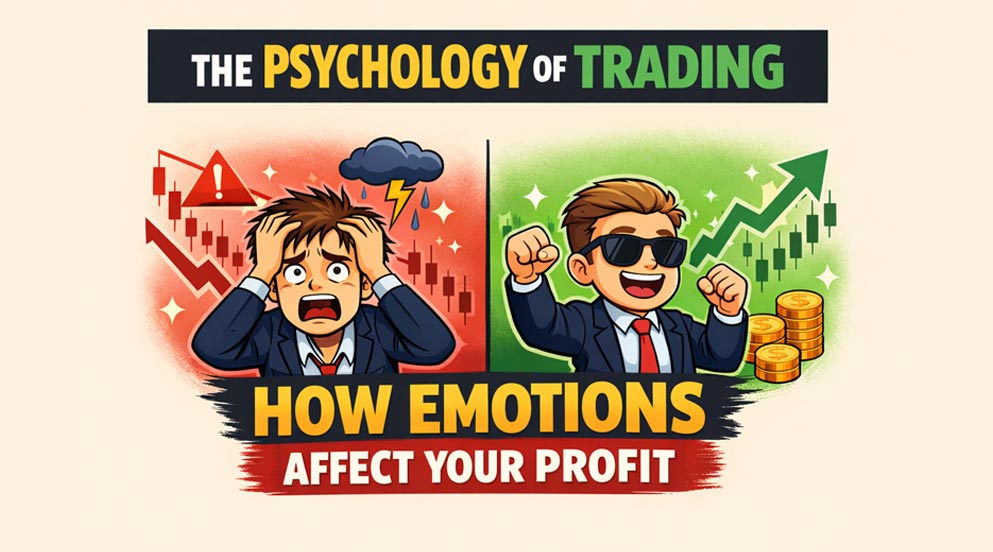
The Psychology of Trading: How Emotions Affect Your Profit
Trading isn’t gambling or a game that guarantees winning, but an approach based on numbers driven by charts, indicators, and strategies. Despite the technical and fundamental analysis, there is much more on the back end, such as human decision-making. However, each of these decision-making processes is encircled with emotion, so understanding the psychology of trading is more important.
Many traders, especially new ones, are easily influenced by hype and updates in the trading industry. It’s good, but not always lucky, as emotions do impact decisions about profits and conditions.
Most traders in the market do lose money, not because of a failed strategy, but more because of emotional interference with execution. Traders are easily pushed by fear, greed, hope, and overconfidence, and even many ignore the rules, repeating costly mistakes. If you want to be a successful trader over time, there isn’t any quick recipe, but learning about emotions and influences is important for managing stress and becoming a pro.
Why Psychology Matters More Than Strategy?
Typically, the trading strategy looks perfect on paper, but in reality, it develops an invisible pressure among traders. This is good for testing emotional control and stability when money is at stake, whether for loss or gain. The psychology of emotions in trading requires patience and determination.
The difference in loss and profit for the same trade between two traders is purely emotional. Its core is discipline, patience, and emotional stability. Trading itself is uncertain, and when traders behave irresponsibly or impulsively, it can have a bad impact. Emotional responses in trading and investing can lead to profits or losses, but most of the time, it’s a struggling phase.
Fear and Its Impact on Trading Decisions
Among many emotions a trader goes with, fear is one of the most powerful. It appears after losses or when trade marketing shows high volatility. The fear can make traders exit positions too early, miss good opportunities, and make them hesitant to act decisively when needed.
In fact, fear keeps many traders from entering the market. The series of losses has led some to become overly cautious and has even caused many to stop trading entirely. This emotional paralysis can be just as harmful as reckless behaviour.
Greed and Overtrading
Greed is the desire to make more profit, often unreasonable and impractical. While it looks motivational, it can still lead to serious losses in trading and stocks. The greedy trading act increases the risk of being trapped by hype and of achieving results too quickly, while disregarding risk management.
- The best word for greed in trading is overtrading, even when conditions in the market aren’t favourable to chase profits.
- This behaviour increases transaction costs and risk exposure, often leading to losses.
- Greed in trading creates unrealistic expectations, leaving many feeling annoyed and stressed even during normal drawdowns.
- Therefore, it pushes them to make impulsive decisions to recover the losses.
Hope and Denial in Losing Trades
Silently harmful in trading is hope especially when it is for an illogical and impractical trading approach. Many traders sometimes hold onto losing positions in the hope of turning them profitable. Rather than accepting the small loss, they are willing to delay exiting, which causes unbearable financial losses. This behaviour is closely linked to denial.
Even after admitting it’s wrong and unrealistic, they keep denying and ignoring, which leads to bad decisions. Just forcing themselves to convince themselves that the market will eventually reverse and get high. Successful traders understand that losses are part of the process. They accept them quickly and move on, rather than allowing hope to override risk management.
Overconfidence and the Illusion of Control
Traders can easily get trapped by their own behaviour while winning some profits, which can also add to the other side of it. Confidence is key to mastering, but overconfidence isn’t cool, as it creates a false sense of market understanding. Many believed a win-win is always the same, but that’s a gimmick and a call to take unnecessary risks. This mindset is dangerous, as it leads to large losses based on the assumption that success will come every single time. Markets are unpredictable, and no trader can control outcomes. Maintaining humility and respect for risk is essential, even during winning streaks.
Stress, Pressure, and Decision Fatigue
Precisely trading looks easy, but it is actually a mentally exhausting activity in a volatile market. Constant monitoring of trade prices, news, and positions can create stress and frustration over time. This is a specific cause for which many act impulsively or struggle to think clearly.
Decision-makingDecision-making can lead to decision fatigue, leaving traders’ psychology ill-equipped to manage challenges. Therefore, it is important to manage stress by following structured routines, taking breaks, and adopting realistic trading schedules to maintain focus and emotional stability.

The Role of Discipline and Consistency
- Adding discipline to trading brings greater emotional stability and even long-term success.
- Maintaining consistency is key, such as sticking to predefined, well-analysed entry rules, exit strategies, and risk limits.
- Precisely, the consistent behaviours add winningness and better performance.
- Emotional decisions need to be controlled as they create randomness and can ruin a profitable strategy.
- Discipline makes trading a structured process rather than an impulsive reaction approach.
- Developing discipline requires self-awareness and accepting short-term discomfort for long-term gains.
Risk Management as Emotional Protection
- In stocks and trading, risk management is real-time support that helps preserve capital and maintain a balanced emotional state.
- Limiting the risk is directly profitable, resulting in fewer losses and reducing emotional pressure.
- Smaller, controlled trading is better than unexpected, unrealistic, or impractical trading.
- Tools like stop-loss orders, position sizing, and risk-reward ratios help remove emotion from decision-making.
- Good risk management promotes emotional stability, allowing focus on execution.
Developing Emotional Awareness
- It’s important to manage emotions to improve decision-making in trading.
- Maintaining the trading journey helps identify recurring emotional patterns.
- Past trades help spot behaviour to manage later.
- Lack of awareness is a risk, so keeping it a mandatory part of learning improves trading behaviour.
- Adopting mindfulness practices, such as deep breathing or short breaks, helps maintain calmness and focus.
The Final Verdict:
Psychology plays an important role in trading decision-making. Emotional stability and realistic expectations help determine profitability and understand losses as part of it. Evaluating each individual’s trading patterns is a lesson in avoiding mistakes and risks, as a healthy mindset helps transform the trading approach, reducing losses and unreal expectations over time.
Source : Click Here