Day Trading vs Swing Trading: Which One Is Right for You?
Most people don’t plan this part perfectly; they move in a single movement in the market, follow success stories, and take a few watched clips seriously. In fact, even picking the style without really knowing or thinking about the trades, impacts, losses, and benefits.
Although days pass, even the weeks, and slowly they fall off the track. In trading, it’s not always about losses that need to be highlighted; it’s more about feelings that don’t sit right or about not meeting expectations. This pace feels wrong at major. That pressure hits differently on the mind and finances, which raises a question: is that me as an individual trader, or the way of my trading among many?
That question matters more than people think.
Day trading and swing trading are often put side by side, like they’re just two options on a list. In reality, they feel completely different once you step into them.
What Day Trading Actually Feels Like?
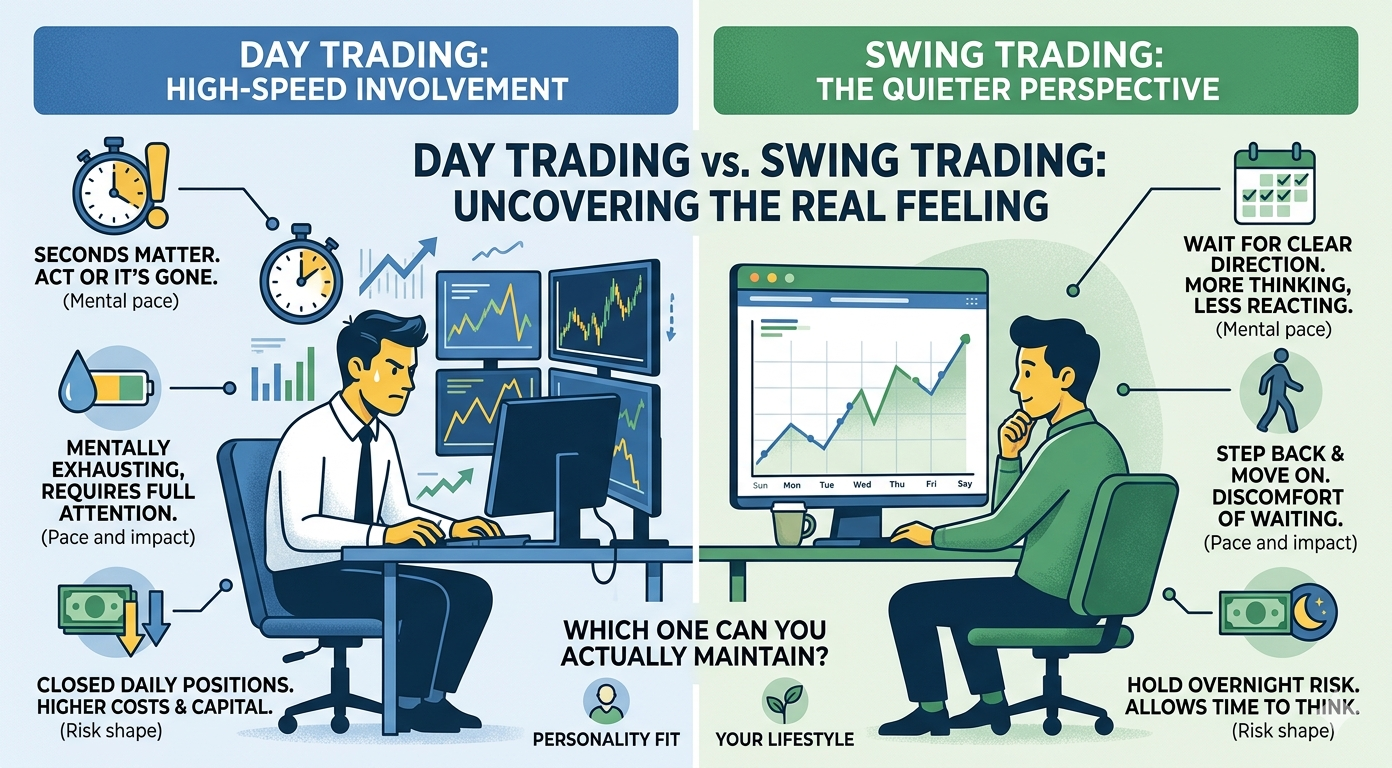
Typically, day trading pulls one in, as the moment it starts, the focus narrows to what’s happening right now. While even watching the price moves, it still makes sense. This setup lets you pull the vibe, which cannot think on time. So, it’s like either take it or don’t. And if you don’t, it’s gone.
Often, some moments feel smoother to grasp a move and exit cleanly. On the other side, some are stretched where nothing seems okay.
That’s a feeling of certain tension, although not always. The harder decision-making comes on how quickly everything moves, as it’s a game of friction, seconds to sit and act before the next decision shows up. It’s not just about knowing what to do. It’s about staying steady while doing it. For some, this constant involvement feels natural. For others, it becomes tiring sooner than expected.
How Swing Trading Feels When You’re Doing It?
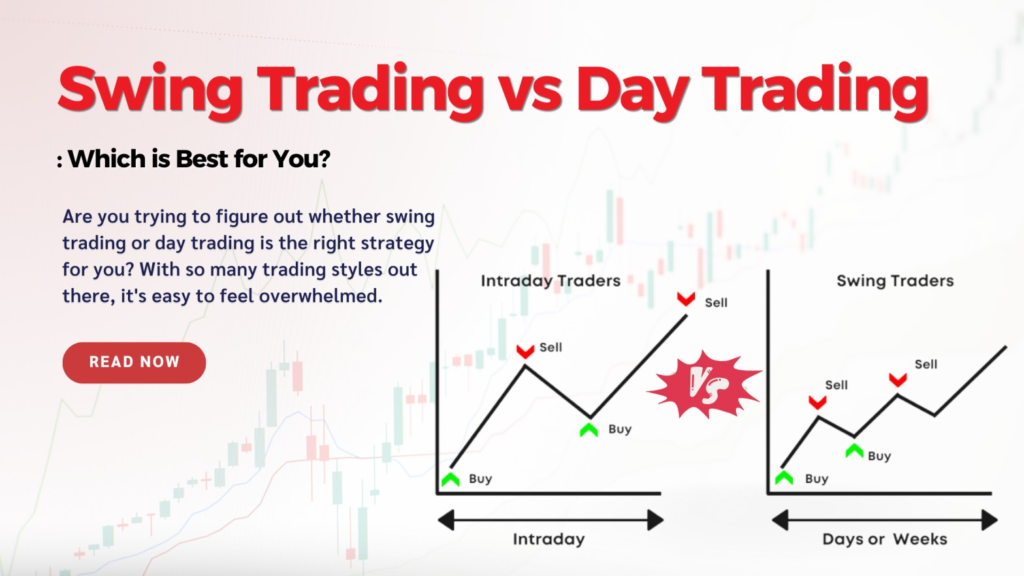
People getting into swing trading need to understand that it’s not something that pulls you in the same way, yet gives a bit of distance. You are part of the market, watching it closely, although not reacting to every single move. It is emphasized that one should wait for something that stands out over time. A level that keeps holding. A direction that becomes clearer after a few days.
There’s more thinking before the trade, and less reacting after. Once you enter, things slow down. You check in, maybe adjust your plan, and then step away again. Firstly, it’s a space that can make you feel empty or strange, especially if you are habituated to constant movement, so you might feel like nothing is happening.
But after a while, it starts to feel different. Quieter. More manageable. However, it’s not easy, as waiting brings its own kind of discomfort and anxiety. Watching trade movements slowly can affect decision-making, as you may start questioning your own decisions. Holding overnight means you don’t control everything that might affect the price.
Still, many people find this pace easier to live with.
Where Time Becomes the Deciding Factor?
Most of the time, it’s a part that tends to get ignored at the beginning and ends up as the matter that matters most. Usually, day trading requires precise attention—especially during specific hours, not occasionally, but consistently.
If your mind is somewhere else, it shows. Swing trading is suitable for people who can spend time on it but can step back after analysing and placing the right trades, then easily move on to other responsibilities or activities. That difference changes how sustainable it feels over time. It’s not about which one is better. It’s about which one you can actually maintain.
Risk Doesn’t Disappear, It Just Changes Shape
Both styles involve risk. That’s part of the deal.
Day trading is quicker: if your trade works, it’s closed at the end of the day. There’s a sense of completion in that. On the other side, swing trading is perfect for people who can stretch that timeline, carry trades forward, and aren’t aware of how things will open up the next day. Sometimes nothing changes. Sometimes the move happens when you’re not watching.
That uncertainty feels different. At the same time, swing trading gives you more time before you enter. You’re not making decisions under the same kind of pressure. So the stress doesn’t go away. It just shifts to a different place.
Clarity Table
| Aspect | Day Trading | Swing Trading |
| Learning Style | Fast-paced, real-time learning; mistakes happen quickly | Slower, more reflective learning; easier to review and improve |
| Costs & Capital | More trades, higher transaction costs, needs more capital | Fewer trades, lower costs, can start with less capital |
| Market Suitability | Works better in fast-moving, volatile markets | Works better in slow, trending markets |
| Trading Frequency | Multiple trades in a day | Trades held for days or weeks |
| Time Commitment | Requires full-time attention during market hours | Flexible, can be managed alongside other work |
| Risk Exposure | Short-term risk, positions closed daily | Overnight risk, positions held longer |
| Decision Speed | Requires quick decisions | Allows time to think and plan |
| Mental Pressure | High intensity, mentally exhausting | Lower intensity but tests patience |
| Consistency Challenge | Hard due to rapid changes | Easier to maintain steady approach |
| Beginner Friendliness | Harder due to speed and pressure | Easier to start and sustain |
The Final Verdict: So, Which One Fits You
That depends, though there is no clean answer. If you feel comfortable with full involvement in trade, making quicker decisions, and staying focused, then day trading may suit you best. On the other hand, if you are okay with resting and stepping back and need time to think about a trade that fits around your routines, go for the swing trading option.
You might not get it right immediately. Most people don’t. Trying both can give you a clearer sense of what works. What matters is staying consistent, focused, and practical.
Source: Click Here