
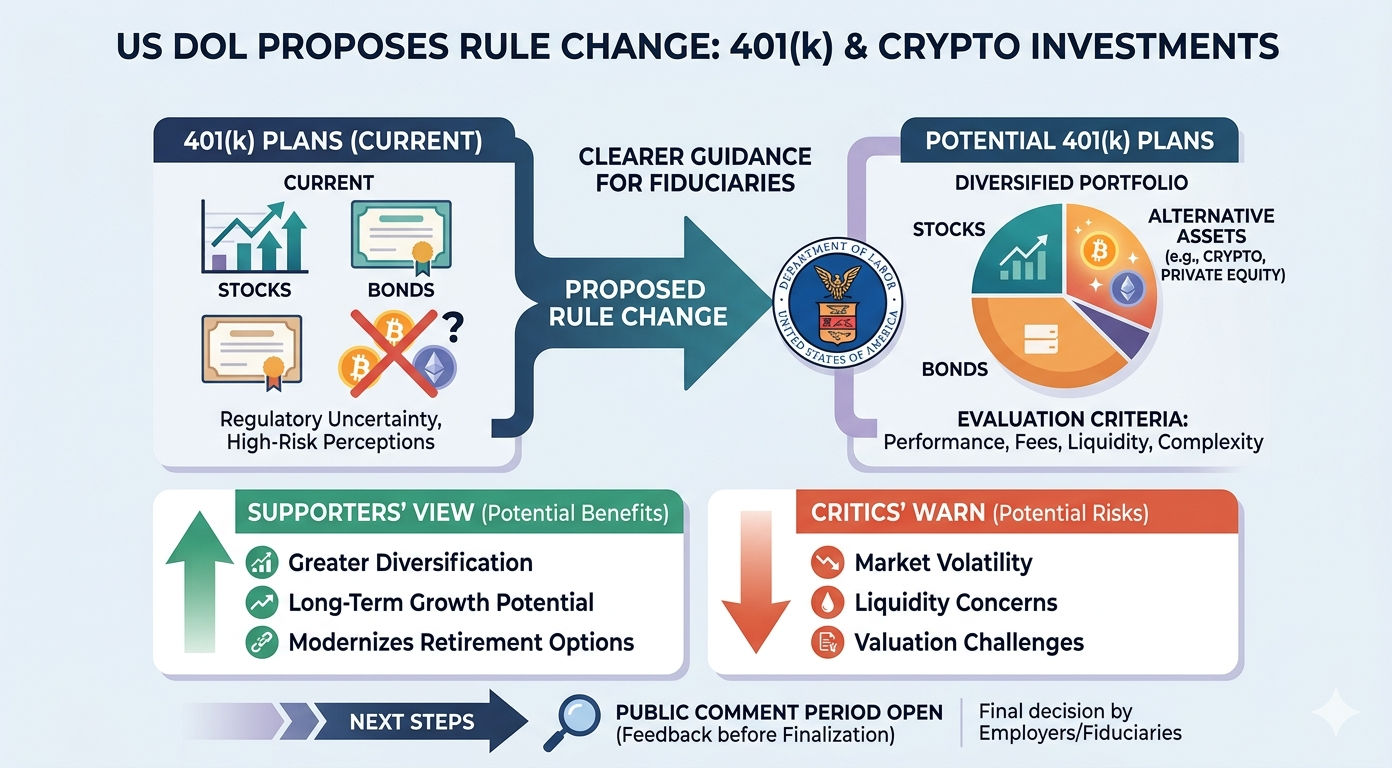
The United States Department of Labor has introduced a proposed rule change that could significantly reshape retirement investing by allowing greater flexibility for alternative assets including Crypto in 401(k) plans. The proposal has quickly sparked discussion among policymakers, financial institutions, and investors, as it may bring digital assets closer to mainstream retirement portfolios.
For years, cryptocurrencies remained largely absent from employer-sponsored retirement programs due to regulatory caution and concerns over market volatility. Now, regulators appear to be reconsidering that approach, signaling a potential shift in how retirement savings could evolve in the digital age.
A Major Policy Shift for Retirement Investing
The proposed rule aims to clarify how retirement plan fiduciaries the individuals responsible for managing investment options can evaluate alternative assets responsibly. If finalized, it could reduce legal uncertainty that previously discouraged employers from offering Crypto in 401(k) plans.
Officials say the goal is not to promote cryptocurrency directly but to modernize investment frameworks so they reflect today’s financial landscape. Retirement markets have traditionally focused on stocks, bonds, and mutual funds, but supporters argue that investment opportunities have expanded significantly over the past decade.
Allowing Crypto in 401(k) plans would mark one of the most notable changes in retirement investment policy in recent memory, especially as digital assets continue gaining attention from institutional investors.
Why Regulators Are Considering the Change
According to policymakers, many plan sponsors avoided crypto exposure because earlier guidance warned fiduciaries to exercise “extreme care.” That caution created uncertainty and potential legal risks for employers.
The new proposal attempts to replace ambiguity with structured evaluation standards. Fiduciaries would still need to carefully assess risks, fees, liquidity, and investor understanding before adding new investment options.
Supporters believe this balanced approach could make Crypto in 401(k) plans possible without removing investor protections. Rather than mandating crypto investments, the rule would simply allow employers to consider them under clearer regulatory expectations.
Potential Benefits Highlighted by Supporters
Advocates of the proposal argue that retirement portfolios should evolve alongside financial markets. Institutional investors, hedge funds, and asset managers already allocate portions of their portfolios to alternative assets, including digital currencies.
They believe introducing Crypto in 401(k) plans could help diversify retirement savings and potentially improve long-term growth opportunities. Younger investors, in particular, have shown strong interest in digital assets and may welcome the ability to include them in retirement strategies.
Some analysts also suggest that even small allocations from retirement accounts could bring significant new capital into crypto markets, further integrating digital assets into traditional finance.
Concerns and Criticism Remain Strong
Despite optimism from supporters, critics warn that retirement accounts should prioritize stability and predictable growth. Cryptocurrencies are known for sharp price swings, and skeptics argue that exposing retirement savings to such volatility could create unnecessary risks.
Financial experts have also raised questions about valuation transparency, fees, and liquidity challenges associated with alternative investments. Opponents worry that average investors may not fully understand the complexities tied to Crypto in 401(k) plans, potentially leading to poor financial decisions.
Some lawmakers have emphasized that retirement savings represent long-term financial security and should be protected from speculative investments.
What Happens Next?

The Department of Labor has opened the proposal for public comment, allowing industry participants, employers, and investors to provide feedback before a final decision is made. This stage is critical, as suggested changes could reshape the final regulation.
Even if approved, the rule would not automatically introduce Crypto in 401(k) plans nationwide. Employers and plan managers would retain the authority to decide whether such investments are suitable for their employees.
Still, the proposal reflects a broader trend: digital assets are increasingly being discussed within traditional financial systems rather than remaining outside them.
A Turning Point for Crypto and Retirement Savings
The debate surrounding Crypto in 401(k) plans highlights a larger question about the future of investing. As financial technology evolves, regulators face the challenge of encouraging innovation while ensuring strong consumer protection.
Whether the proposal ultimately leads to widespread adoption or cautious experimentation, it signals growing recognition that cryptocurrencies are becoming part of mainstream financial conversations.
For now, investors, employers, and regulators will closely watch the feedback process because the outcome could shape how future generations save for retirement in a rapidly changing financial world.
Source – Click Here